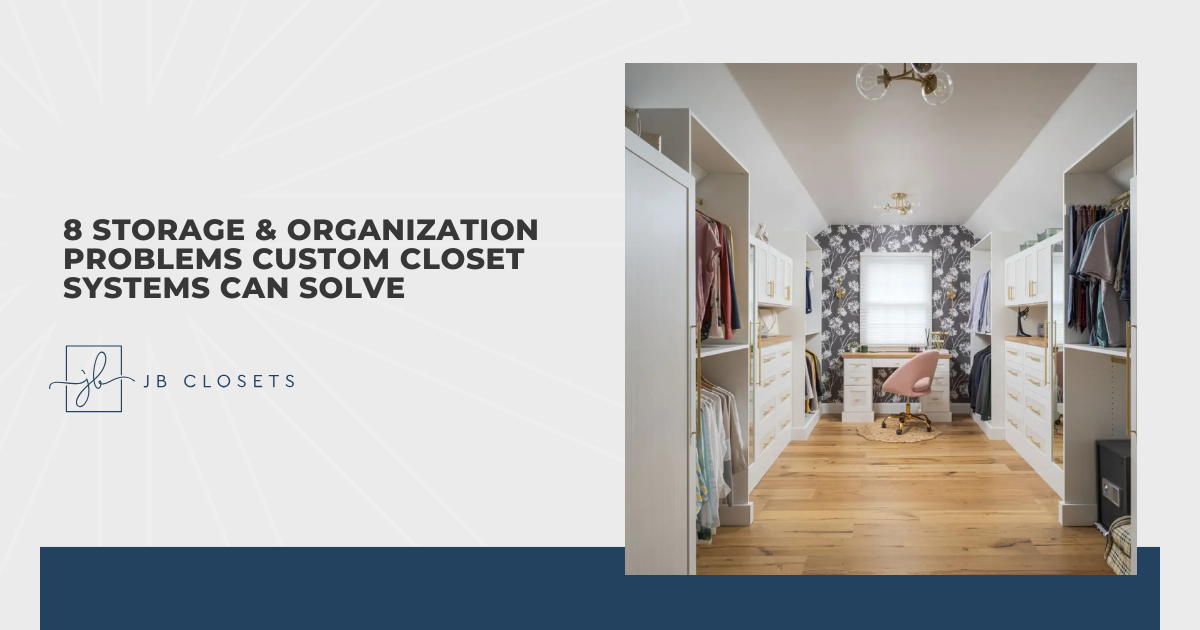
8 Storage & Organization Problems Custom Closet Systems Can Solve

Most homes have at least one closet that doesn't work the way it should. Shelves that are too high, rods crammed with clothes that never seem to fit, and floor space buried under things that have no designated home. I've seen this same setup home after home, and the frustration it causes is almost always the same regardless of the size of the space. Over time, these small inefficiencies add up into a storage problem that custom closet systems are uniquely equipped to solve.
If you've ever bought a shelving kit or a set of drawer organizers hoping it would finally solve the problem, you already know how that story ends. Generic systems are designed around average spaces and average needs, which means they work adequately for almost nobody. Custom closet systems take a different approach, built specifically around your layout, your lifestyle, and the way you actually use your space.
Before diving in, here's a look at the eight problems a custom closet system can help you tackle.
- Limited closet space
- Damaged and disorganized clothing
- Poor visibility and accessibility
- A layout that doesn't fit your lifestyle
- Shared closet conflict
- Seasonal storage overflow
- Cluttered entryways and mudrooms
- Failed off-the-shelf solutions
Read on to find out how a custom closet system can address each one of these problems in your home.
Limited Closet Space
Closet space is rarely the actual problem. Most closets have more potential than they appear to, but that potential goes untapped when the layout doesn't make efficient use of what's available. A standard builder-grade closet typically offers a single rod and one shelf, leaving a significant amount of vertical and horizontal space completely unused. For most homeowners, the issue isn't the size of the closet but what's being done with it.
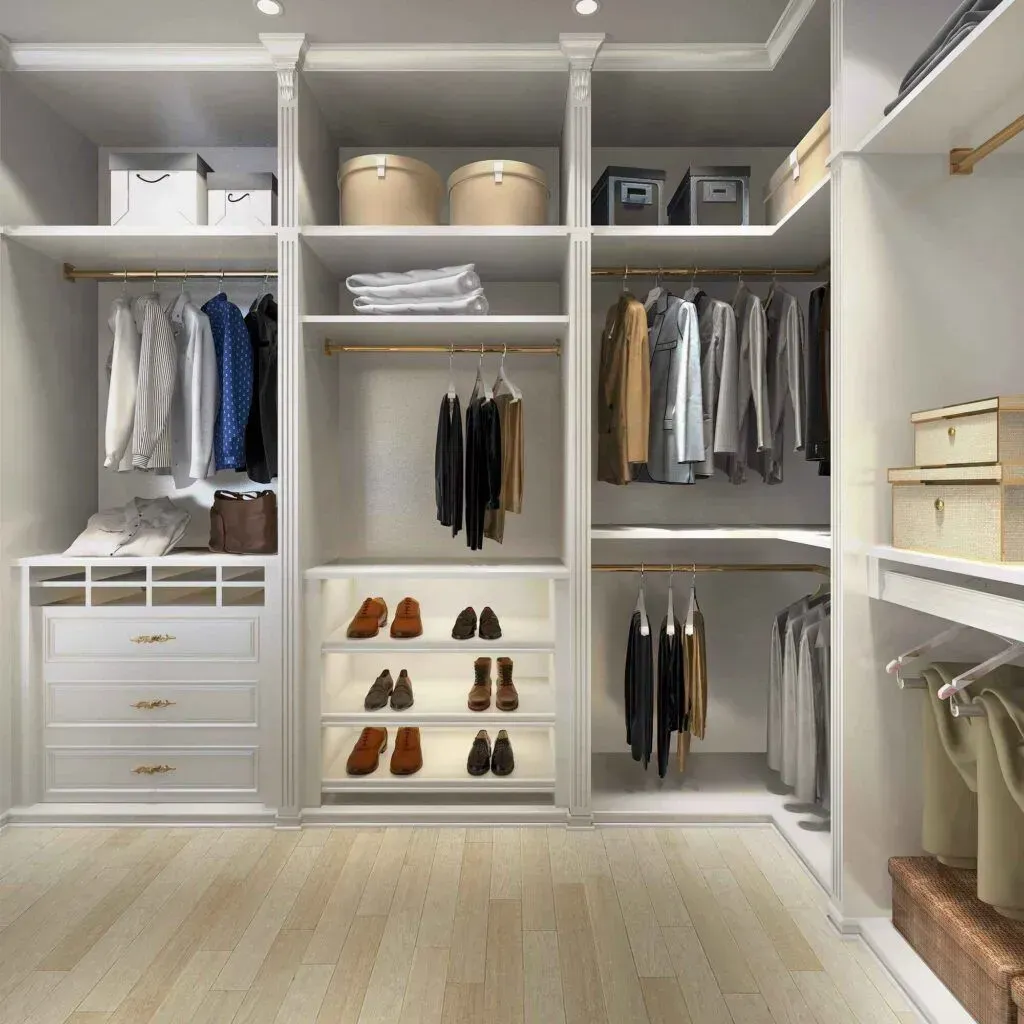
Double hanging rods, dedicated shelving, and drawer units fill in the gaps that a generic closet leaves behind, turning a closet that feels too small into one that comfortably handles everything it needs to. Custom closet systems work within the exact dimensions of your space rather than around them. Pull-out units and angled shoe racks make use of spaces most closets simply ignore.
Corners and awkward angles are another area where standard closets consistently fall short. Square footage that once felt wasted becomes some of the most functional storage in the entire closet. Custom solutions treat every corner and odd angle as an opportunity rather than an obstacle. Worth noting is that the difference between a cramped closet and a functional one often comes down to layout decisions rather than square footage.
Damaged and Disorganized Clothing
Clothes don't wrinkle, stretch, or get damaged on their own. Overcrowded rods, shelves that are too deep, and drawers without proper dividers are almost always the culprit. When there isn't enough space for everything to hang or fold properly, clothing pays the price over time. For anyone with a significant wardrobe investment, this is a problem worth solving properly.
Short hang sections for shirts and jackets, long hang sections for dresses and suits, and correctly sized drawers for folded items all contribute to keeping clothes in better condition for longer. Cedar lining and proper ventilation are also options worth considering, as they protect clothing from humidity and pests. Drawers with built-in dividers keep folded items from shifting and getting wrinkled between wears. A closet designed around your wardrobe rather than a generic template makes a noticeable difference in how long your clothes last.
Shoe storage is another area where a lack of proper space causes real damage. Shoes piled on top of each other lose their shape quickly, and boots left without support collapse over time. Dedicated shoe shelving, angled displays, and boot inserts are all features worth incorporating to keep footwear in better condition for longer.
Poor Visibility and Accessibility
Searching through a dark, overcrowded closet to find a specific item is a daily frustration that most people accept as normal when it doesn't have to be. Poor visibility and limited accessibility are two of the most common complaints about standard closets, and both are entirely solvable with the right layout and lighting. Knowing exactly where everything is and being able to reach it quickly changes the experience of getting dressed entirely.
Pull-out shelves, rotating shoe carousels, and pull-down hanging rods bring items that would otherwise be out of reach directly to you. I've seen how much of a difference proper lighting makes in a closet, as integrated LED strips and motion-activated fixtures eliminate the dark corners that make finding things so frustrating. Open shelving for frequently used items and clear drawer fronts ensure everything is visible at a glance.
Accessibility isn't just about convenience, as it directly impacts how well the organization system holds up over time. When everything is easy to see and reach, putting things back where they belong takes no effort at all. Dedicated sections for accessories, bags, and jewelry also reduce the time spent searching for smaller items that tend to get lost in standard closets. A closet that's easy to navigate is one that stays organized with far less effort.
A Layout That Doesn't Fit Your Lifestyle
Standard closets are designed for an imaginary average person with an imaginary average wardrobe, which is why they rarely work well for anyone in particular. A frequent traveler needs luggage storage and easy access to a curated selection of versatile pieces. A fitness enthusiast needs dedicated space for athletic wear, shoes, and equipment. Someone who works from home has entirely different storage priorities than someone who commutes to an office every day.
Lifestyle-specific features are what set custom closet systems apart from anything available off the shelf. Valet rods for planning outfits, built-in hampers for sorting laundry, and dedicated accessory drawers are all features that can be incorporated based on how you actually live. Storage solutions built around daily routines rather than generic assumptions make the closet feel intuitive to use from day one.
For people with extensive shoe or handbag collections, display shelving and glass-front cabinets turn those collections into a feature rather than a storage challenge. Jewelry drawers with velvet lining, watch displays, and built-in safes are other options that cater to specific lifestyle needs. No off-the-shelf system comes close to offering that level of personalization, and the difference in daily usability reflects it.
Shared Closet Conflict
Two people sharing a closet is one of the most common sources of household friction that nobody talks about openly. Space gets claimed without discussion, boundaries blur over time, and before long one person's section has quietly expanded into the other's. Without a clearly defined layout, shared closets tend to become a source of daily low-grade tension that's easy to avoid with the right setup.
Dividing a shared closet into two clearly defined zones eliminates most of that friction immediately. From my own observations, the couples who struggle most with shared closet space aren't dealing with a space problem but a design problem. Custom closet systems make it possible to design each person's section around their specific wardrobe and storage needs rather than splitting the space arbitrarily down the middle. Neither person has to compromise on functionality when the layout was built with both of them in mind.
Matching hanging heights, drawer configurations, and shelf placement to each person's wardrobe keeps the closet organized without requiring constant negotiation. Separate shoe storage, individual accessory drawers, and dedicated sections for each person's clothing categories make boundaries clear from the start. Boundaries built into the design of the closet are far more effective than any verbal agreement about where things should go.
Seasonal Storage Overflow
Closets weren't designed to hold two wardrobes at once, but that's exactly what most people ask them to do. Winter coats, heavy sweaters, and boots compete for the same space as lightweight summer clothing, and the result is a closet that feels perpetually overcrowded regardless of how often it gets organized. Rotating seasonal items in and out of a standard closet is a frustrating process that most people put off as long as possible. Sound familiar?
High shelving, deep storage drawers, and dedicated sections for out-of-season items make seasonal rotation far less disruptive. Clear bins with labeled contents stored on upper shelves keep seasonal items accessible without letting them interfere with day-to-day clothing. Vacuum storage bags integrated into the closet design compress bulky winter items down to a fraction of their normal size, freeing up significant hanging and shelf space. With the right setup, seasonal transitions go from a half-day project to something that takes minutes.
Seasonal accessories like scarves, hats, and gloves also need a home that keeps them organized and easy to find when the weather changes. Dedicated drawers and shelf sections for these items prevent them from ending up in random spots around the closet. Knowing exactly where seasonal items live makes the transition between wardrobe seasons significantly faster and less stressful than digging through an overstuffed closet twice a year.
Cluttered Entryways and Mudrooms
The entryway is the first thing people see when they walk into a home, and in most households it's also the most consistently cluttered space in the entire house. Shoes pile up by the door, bags get dropped on the floor, and coats end up draped over whatever surface is closest. Without a designated place for everything that comes in and out of the house daily, the entryway becomes a dumping ground by default. If this sounds like your entryway, you're far from alone.
Custom closet systems extend well beyond the bedroom, and entryways and mudrooms are some of the spaces that benefit most from a tailored organization solution. Built-in cubbies for shoes, hooks at the right height for bags and coats, and dedicated drawers for keys, mail, and everyday essentials give every item that passes through the entryway a specific home. Bench seating with storage underneath adds functionality without taking up additional floor space. Once everything has a designated spot, keeping the entryway tidy stops feeling like a constant battle.
Families with children have even more to manage in the entryway, from backpacks and lunchboxes to sports gear and seasonal outerwear. Assigning a dedicated cubby or section to each family member makes it clear where things belong and reduces the time spent searching for items on the way out the door. Morning routines run noticeably smoother when the entryway is set up to handle everything the household brings in and out on a daily basis.
Failed Off-the-Shelf Solutions
Most people have tried at least one off-the-shelf storage solution that promised to fix their closet and didn't. Wire shelving that sags under weight, drawer organizers that don't fit the drawer, and modular systems that don't quite line up with the wall are all familiar disappointments. The problem isn't the effort put into finding a solution but the fact that generic products aren't built to solve specific problems in specific spaces. If you've been through this cycle more than once, it's not a coincidence.
Off-the-shelf systems are manufactured to fit the widest possible range of closets, which means they're optimized for none of them. Homeowners who have spent significant time and money cycling through multiple generic solutions almost always find that the difference a custom closet system makes is dramatic. A system built for your exact space, your exact wardrobe, and your exact daily routine doesn't require the workarounds and compromises that generic products demand. What felt like a you problem turns out to be a product problem.
Custom closet systems also hold up far better over time than their off-the-shelf counterparts. Higher quality materials, professional installation, and hardware designed for long-term daily use mean the system performs as well five years in as it did on day one. Generic solutions tend to loosen, sag, and fall apart with regular use, turning a short-term fix into a recurring expense. Investing in a system that's built to last is almost always cheaper in the long run than replacing a generic one every few years.
Conclusion
Most storage problems aren't about the size of the closet or the amount of stuff inside it. Overcrowded rods, poor visibility, shared spaces without boundaries, and entryways that absorb everything the household brings in are all symptoms of the same underlying issue: a space that was never designed with the person using it in mind. Custom closet systems solve that problem at the source, and the impact goes well beyond a tidier closet. Once you experience a space that was built around the way you actually live, settling for anything less stops making sense.
Recent Posts