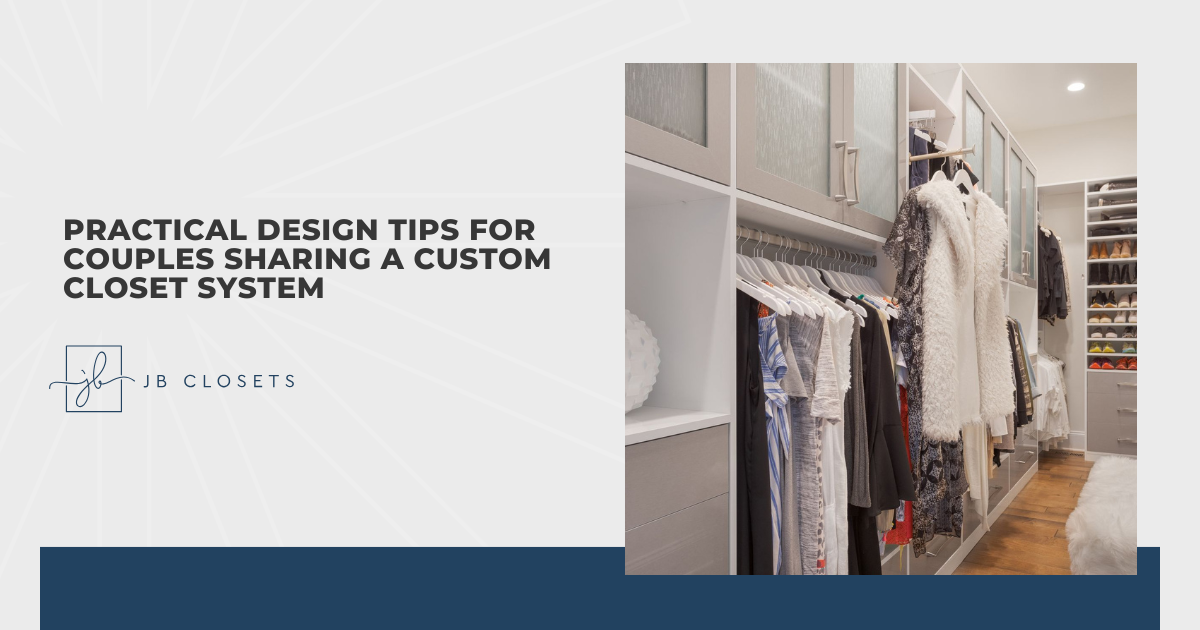
Practical Design Tips for Couples Sharing a Custom Closet System

Bret Chevrier • June 26, 2026
Practical Design Tips for Couples Sharing a Custom Closet System

Sharing a closet with your partner means two wardrobes, two routines, and one space that has to work for both of you. Fitting all of that comfortably is what a custom closet system is built for. It lets you plan around both sets of needs instead of squeezing one person into whatever's left over. Most friction in a shared closet traces back to decisions made early, before a single shelf goes in. When those decisions are sound, the space stops feeling like a daily negotiation.


You don't need matching wardrobes or identical habits for a shared closet to work well. What you need is a layout that respects what each of you owns and how each of you moves through the room. A few targeted design choices handle most of that, and none of them require extra square footage. The rest comes down to applying them in the right order.


A well-planned custom closet system for two comes down to a handful of key design decisions:


  • Take stock of what each person owns
  • Match hanging rods to garment types
  • Give each partner a defined zone
  • Build in a shared central section
  • Leave room to adapt later
  • Plan for two people getting ready
  • Layer in lighting and accessory stations


These decisions build on each other, so working through them in order gives you a closet that feels fair to both of you. Let's look at how each one plays out.


Before anyone sketches a layout or picks a finish, the two of you need an honest count of what you're storing. I always start clients here because the closet designed around guesswork is the one that runs out of room in year one. Pull everything out and sort it by type: long-hanging pieces, shirts and folded-length items, shoes, bags, and anything that lives in drawers. Do this separately so each person's totals stay clear.


The point of counting is proportion. One of you may own three times the hanging pieces while the other needs twice the drawer space, and those ratios should drive how the storage gets divided later. Pay attention to the outliers too, since they dictate the trickiest measurements. A stack of floor-length coats or forty pairs of shoes needs planning an average count would miss.


Once both lists are in front of you, you'll see where the real demands are and where the two of you naturally differ. Maybe one count leans toward folded knits and the other toward dresses, or maybe you both need more shoe storage than usual. Keep this picture handy, because guessing now forces expensive corrections later

Hanging rods do the most work in any closet, and the height you set them at depends entirely on what hangs from them. Shirts, blouses, jackets, and folded-length trousers only need around forty inches of clearance, which means you can stack two rods in the same vertical run. Double-hanging like this nearly doubles your capacity in the sections that hold shorter pieces. Reserve it for the garments that actually fit rather than applying it everywhere by default.


Longer items follow a different rule. Dresses, coats, robes, and full-length trousers need a single rod set high enough to keep hems off the floor, usually around 68 inches of clear drop. Group these together in their own run so the long pieces aren't scattered across the closet. A dedicated long-hang section keeps everything visible and wrinkle-free.


The mix of rod types should follow the counts you took earlier. If one person's wardrobe is mostly shirts and the other's leans toward dresses, your double-hang and long-hang sections won't be evenly split, and they shouldn't be. Don't forget the in-between heights either, since skirts and shorter coats sometimes call for a medium rod between the two standard runs. Measuring your longest item in each category before installation is the surest way to land on heights that fit.

Once you know what each person owns, the next move is drawing clear lines around whose space is whose. A shared closet runs smoother when each of you has a defined territory rather than two wardrobes bleeding into each other. Couples who skip this step tend to regret it, because undefined space always gets claimed by whoever fills it first. Assigning zones up front spares you that quiet, ongoing turf war.


The simplest split gives each person a vertical column or a side of the closet, top to bottom. Within your own zone, you control the rod heights, the drawer count, and the shelf spacing, all based on the totals you tallied earlier. This keeps your daily-use items grouped in one predictable place, so neither of you has to reach across the other's section to grab a shirt.


Size the zones to the wardrobes, not to a strict halfway mark. I've watched couples force an even divide and end up with one side cramped while the other sits half empty, so let the counts settle the proportions instead. Once you've set the line, mark it clearly with a divider panel, a change in finish, or even a deliberate gap. Visible boundaries hold up better than mental ones, especially when you're both moving quickly.

Not everything in the closet belongs to one person or the other. Linens, spare bedding, seasonal gear, and items the two of you reach for jointly need a home that sits outside either zone. A shared central section gives those things a clear place without pulling from anyone's personal allocation. Putting it between the two zones also keeps it equally within reach for both of you.


Open shelving works well for this middle ground, since it handles bulky and irregular items that don't hang or fold neatly. Adjustable shelves earn their keep here, because a stack of comforters and a row of shoe boxes call for very different spacing. Reserve a couple of deeper shelves for awkward pieces like luggage or storage bins, keeping them out of the personal zones you sized for clothing.


Think about what genuinely qualifies as shared before you build this in, since a catchall for anything without an obvious owner fills up fast. Limit it to things you both use or things that truly have nowhere else to live. Height matters too: place everyday shared items at eye level and push rarely touched seasonal things to the top, with a step stool tucked nearby to make those high shelves usable.

The wardrobes you count today won't be the wardrobes you own in five years. Jobs change, seasons shift, and the balance between the two of you rarely holds steady for long. A closet locked into one fixed layout forces you to work around it the moment your needs move. Building in flexibility from the start keeps the space useful as life changes around it.


Adjustable shelving is the easiest place to start. Tracks or pin systems let you raise, lower, or add shelves without tools, so a section sized for sweaters today can hold boxes or bags tomorrow. The same logic applies to rods mounted on movable brackets. When the hardware shifts easily, the closet bends to fit you instead of the reverse.


Drawers and pull-outs deserve the same thinking, since modular inserts can be rearranged as your habits evolve. Leaving a little open capacity now means you're not rebuilding when one wardrobe grows. Try to leave one section deliberately undefined too, because an empty run of wall or bare track gives you somewhere to grow without disturbing the rest of the layout

A shared closet earns its keep on weekday mornings, when both of you are moving through it at once. Storage that looks fine on paper can still create a bottleneck if two people can't stand, reach, and turn without colliding. The fix starts with walkway width: leave at least three and a half feet of clear floor between facing runs so two of you can pass without a shuffle. The extra clearance is the difference between a closet you share comfortably and one you take turns using.


Door and drawer swing matters just as much as floor space. Drawers on opposite walls shouldn't open into each other, and a hinged door shouldn't block the other person's access when it's open. I always map out how each component opens before anything gets installed, staggering placements where two paths would otherwise cross. Pull-out hardware that glides straight back keeps clearances tight in a narrow space.


Reach is the last piece. Each person's daily items should sit within an arm's span of your own zone so neither of you is crossing the closet at the busiest moment, with frequently worn pieces between shoulder and hip height where they're fastest to grab. Before you commit, walk the planned layout with your partner and mime a typical morning, watching for the spots where you'd bump or wait. Catching those collision points on paper is far cheaper than discovering them after the build.

With the structure settled, the finishing details are what make a shared closet feel considered for both of you. Good lighting comes first, because even a well-organized closet is hard to use in shadow. Run LED strips under shelves and along the tops of hanging sections so neither of you is squinting at colors in dim light. Motion-activated fixtures help when both of you are in and out at odd hours and don't want to hunt for a switch.


Accessory storage is where each person's individual needs are most evident. One of you might want a velvet-lined drawer for watches and cufflinks while the other needs pull-out trays for jewelry or a row of hooks for belts and scarves. Build these stations into each person's own zone rather than treating them as an afterthought. Tailoring the small storage to what you each actually wear keeps the daily routine quick.


Valet rods and a few thoughtful extras round things out, giving each of you a spot to stage tomorrow's outfit, plus a bench for dressing and ideally a full-length mirror apiece. Keep the finishes consistent even where the contents differ, since matching hardware, lighting, and materials make the space look intentional. Pull the whole space together visually and a custom closet system reads as one cohesive room rather than two wardrobes forced to share.


A shared closet works best when it reflects two people honestly rather than forcing one tidy compromise. When the planning holds up, a custom closet system stops being a space you negotiate over and becomes one you both reach for without a second thought. The couples who love their closet years later are the ones who designed around how they actually live, not how a showroom said they should. A space built for the two of you is the kind that gives back every single morning.

Share this article

Recent Posts

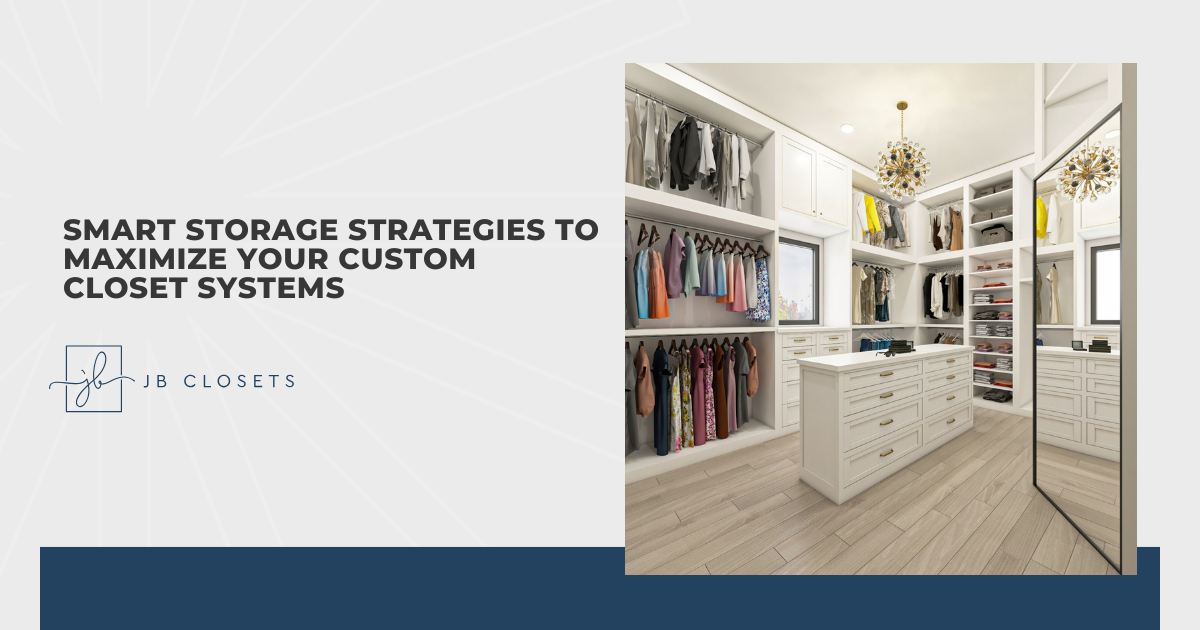
Smart Storage Strategies to Maximize Your Custom Closet Systems
May 28, 2026
Learn how to get more out of your custom closet system with simple storage strategies that keep your space organized, functional, and working for you every day.
8 Storage & Organization Problems Custom Closet Systems Can Solve
By Bret Chevrier May 28, 2026
Discover how custom closet systems can solve the most common storage and organization problems homeowners face, from limited space to cluttered entryways.
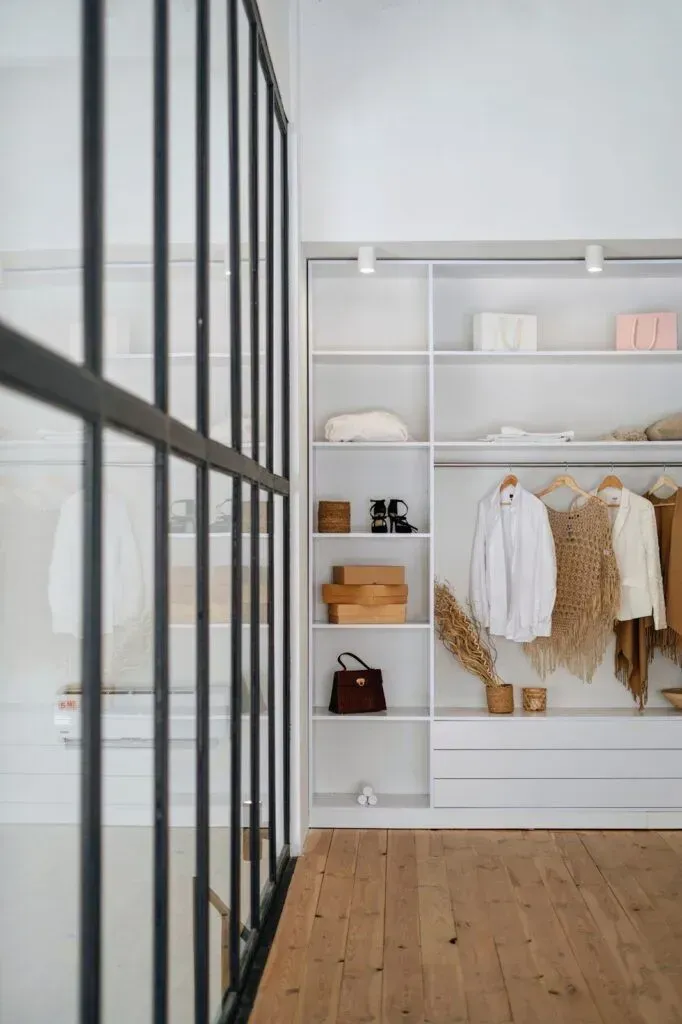
Custom Closet Design Tips for Small Bedrooms
By Bret Chevrier September 28, 2023
Maximize your small bedroom with custom closet design tips that enhance storage, improve organization, and create a stylish, clutter-free space.

Small Entryway Closet Makeover: Space Saving Tips
By Bret Chevrier September 14, 2023
Transform your small entryway closet with smart space-saving tips, clever organization ideas, and stylish solutions to keep your home tidy and functional.
Custom Closet vs. Standard Closet: What Are the Differences?
By Bret Chevrier August 31, 2023
Discover the key differences between custom closets and standard closets, from design flexibility and storage efficiency to cost, quality, and overall home value.
How to Create Your Dream Laundry Room
By Bret Chevrier August 17, 2023
Design your dream laundry room with smart storage, efficient layouts, and stylish features that make everyday chores easier and more enjoyable.
How Custom Closets Increase Home Value
By Bret Chevrier July 27, 2023
Boost your home’s value with custom closets that maximize storage, enhance organization, and add a touch of luxury buyers love.
Designing Your Dream Closet: Tips for Custom Closet Layout and Planning
By Bret Chevrier July 13, 2023
Create your dream closet with smart layout and planning tips. Discover how to maximize space, improve organization, and design a custom closet that fits your lifestyle.
Luxury Custom Closet Features You Need in Your Florida Home
By Bret Chevrier June 28, 2023
Luxury Custom Closet Features You Need in Your Florida Home
A modern white walk-in closet featuring open shelving, a hanging rod, and a built-in recessed mirror.
By Bret Chevrier June 14, 2023
We’ve all seen it before. The smaller rooms in a home with closets are equipped with nothing but a single hanging rod. The storage potential feels utterly hopeless and can leave you scratching your head about where you’re going to fit all of your items. The good news is getting custom closets in Florida for smaller rooms is something that’s definitely an option. Custom closets can make a huge difference when it comes to reaching your full storage potential. Not to mention the many tips you can use to maximize your space if you’re dealing with a smaller closet. Luckily, we’re going to cover both of these things in today’s post so you can be sure you’re getting the most out of it.
Show More